President Dissanayake Dissolves Parliament, Calls for Elections

President Dissanayake Dissolves Parliament, Calls for Elections

President Anura Kumara Dissanayake has made a significant move in Sri Lanka’s politics by dissolving Parliament. This major step is in readiness for a snap election, abiding by the Constitutional procedure. It reflects President Dissanayake’s intent to reshape government policies to match his vision, following his election win.
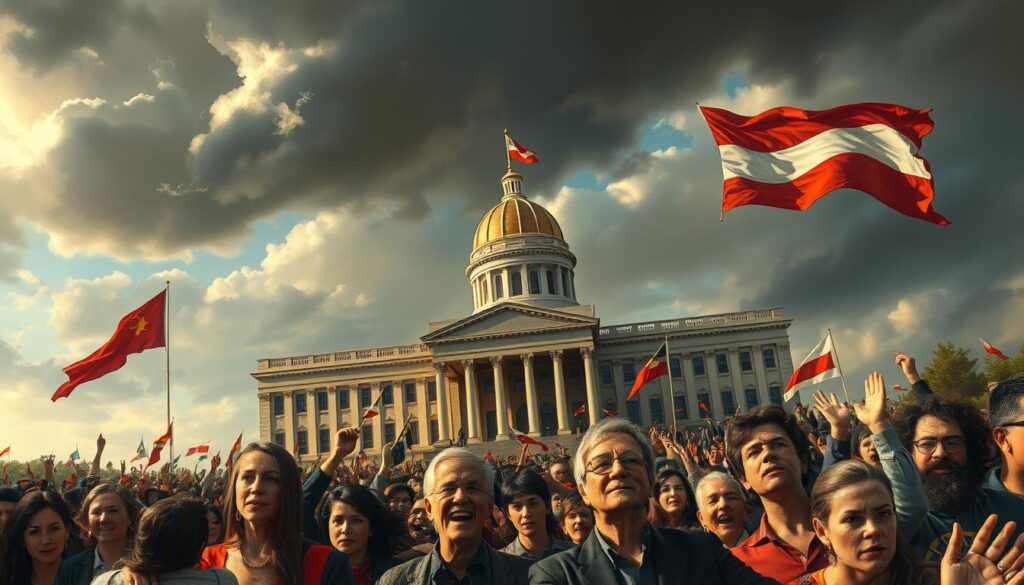
President Dissanayake Dissolves Parliament, Calls for November Elections

Under Dissanayake’s lead, the National People’s Power (NPP) held just three seats in the previous 225-member assembly. Yet, this bold move sets the foundation for transforming the legislature. The Election announcement for November 14th aligns with the people’s hopes and comes almost a year ahead of the usual schedule.

Sri Lanka is currently facing tough economic hurdles, a continuation of the 2022 economic slump. Amidst this, the NPP has been vocal about fighting corruption and poverty. This push grew stronger after Dissanayake’s support surged from 3% in 2019 to winning the next election, showing his commitment to strengthening Sri Lanka’s governance. This is crucial for managing the adjustments needed for a vital IMF bailout package.

President Dissanayake’s Bold Move: Dissolving Parliament

Sri Lanka’s new president, Anura Kumara Dissanayake, made a bold move. He dissolved the government. This marks a big moment in Sri Lanka’s politics. It shows he’s serious about his campaign promises for a transparent and reformed government.

President Dissanayake signing Government dissolution documents

Dissanayake leads the National People’s Power alliance. His goal is a new election that reflects the current issues. This action isn’t just symbolic. It aligns with the public’s demands, shown by his win in the election.

A Sudden Parliamentary Decision and Its Background

Dissanayake won the presidency unexpectedly, without a clear majority at first. A second count confirmed his win. His victory in the 2024 elections was a huge leap from a small vote share in 2019. People appreciate his firm stand against corruption.

Implications for Sri Lanka’s Political Landscape

The government’s dissolution is a turning point for Sri Lanka. Snap elections are coming. These elections could change the political scene a lot. Before, the National People’s Power had few seats. The new elections can create a parliament that reflects current public desires.

This change brings hope for not just political reform but economic growth too. A World Bank report expects a 4.4% growth for Sri Lanka in 2024. Development in industry and tourism could boost the economy.

The result of this political shift aims to create a government that truly represents the people. This will shape Sri Lanka’s future political and economic paths in the years ahead.

The Anticipated Impact of the November Election

As the November election date draws near, Sri Lanka is at a crucial point. This concerns its economic and political future. The outcome of the elections is expected to have a big impact. This impact concerns both Sri Lanka’s economy and key policy reforms. These reforms are influenced by the IMF bailout terms and the governance style of the new government.

The decision to dissolve Parliament and set an election timetable is a major political update. It could change the administration’s setup. The IMF’s recent agreement to provide $2.9 billion to Sri Lanka highlights the need for urgent reforms and fiscal stability. The upcoming elections are expected to drive these reforms.

Sri Lanka’s Economy and the IMF Bailout Overhaul

Sri Lanka’s economic situation is critical, with huge foreign debts and a great need for IMF help. After the elections, it will be very important for the government to stick to the IMF bailout terms. This includes debt restructuring and systemic reforms for economic stability. Changes in policy after the November election date could alter the bailout terms. This would affect recovery paths and international economic relationships.

Prospects for Anti-Corruption and Anti-Poverty Policies

The upcoming election is key for anti-corruption policies and anti-poverty policies. The public’s desire for clean governance has made these policies very important. Proper management of these issues could greatly gain public trust and support. This could lead to a government that values transparency and fair growth.

Policy Focus Pre-Election Post-Election Forecast
Economic Stabilization High Dependency on IMF Aid Increased Self-sufficiency
Anti-Corruption Measures Initial Frameworks Set Strengthening of Institutional Mechanisms
Poverty Reduction Limited Social Programs Expansion of Social Safety Nets

This election is crucial for both the immediate economic recovery and the long-term welfare of the nation. As Sri Lanka goes through these significant changes, the whole world is watching. The November elections could mark a significant shift for this South Asian country.

Conclusion

In the landscape of Sri Lanka politics, President Dissanayake’s decision to dissolve parliament is key. This move leads to an election on November 14, 2024. Over 17 million voters are set to cast their votes. The world will watch as Sri Lanka tackles this pivotal moment amidst economic hardships. The nation’s efforts to meet IMF’s fiscal conditions are crucial for growth.

The race for 225 seats in Parliament is filled with anticipation. To gain a majority, a party needs at least 113 seats. With only three seats, the governing party faces a tough challenge. This comes after Harini Amarasuriya became the first female prime minister in decades. Her election is significant, mirroring the era of Sirimavo Bandaranaike. Additionally, steps like lowering policy rates show efforts to boost the economy without harsh austerity.

President Dissanayake’s call for November elections starts a journey to tackle corruption and poverty. With the election date near, there’s a push for effective governance. The next parliament meets on November 21, 2024. They face challenges like debt renegotiation and following IMF’s advice. The upcoming elections are watched globally, offering a chance for Sri Lanka’s recovery and political renewal.

Colombo Hosts International Film Festival Highlighting South Asian Cinema

Colombo Hosts International Film Festival Highlighting South Asian Cinema

Colombo, Sri Lanka, is set to host the SAARC Film Festival 2024. This event celebrates South Asian cinema’s rich heritage. The festival returns for its 10th edition after a brief pause due to the pandemic.

Colombo Hosts International Film Festival Highlighting South Asian Cinema

The SAARC Film Festival began in 2011. It has become a top platform for South Asian filmmakers to showcase their talents. The event features films screened between May 1, 2022, and April 30, 2024.

Colombo brings together filmmakers, critics, and enthusiasts from the SAARC region. The festival promotes cultural diversity in films and supports independent cinema. It provides a platform for sharing unique perspectives and stories.

Through this event, the film industry in South Asia continues to grow and develop. Filmmakers can engage in meaningful dialogue and exchange ideas. The festival contributes to the region’s cinematic landscape.

SAARC Film Festival 2024: Celebrating South Asian Cinema

The SAARC Film Festival returns in 2024, showcasing South Asia’s cinematic brilliance. This 10th edition will highlight the best of Sri Lankan cinema and regional film industries. After a pandemic-induced break, the event promises to be spectacular.

Sri Lanka hosts this prestigious festival, promoting cross-cultural collaborations among SAARC member states. The country’s vibrant film industry and rich culture make it an ideal setting. This event celebrates South Asian cinema’s diversity.

Objectives of the SAARC Film Festival

The SAARC Film Festival 2024 aims to achieve several key goals. It promotes mutual cultural heritage through film. The event creates opportunities for filmmakers to gain recognition.

  • Promoting mutual cultural heritage, norms, traditions, and stories through the visual medium of film
  • Creating opportunities for filmmakers to have their creations critiqued and recognized by an international panel
  • Providing a forum for exchanging ideas and knowledge-sharing among experts in the field

The festival features films from South Asia screened between May 1, 2022, and April 30, 2024. Directors and artists will join workshops to improve future productions. This fosters growth in regional film industries.

Sri Lanka’s rich history of movie events ensures an unforgettable experience. The SAARC Film Festival 2024 will celebrate storytelling and silver screen magic. It’s set to be a landmark event in South Asian cinema.

Diverse Film Categories and Nominations

The SAARC Film Festival 2024 honors South Asian cinema’s rich diversity. It showcases the region’s best films, from features to shorts, documentaries, and web-based productions. This event aims to highlight exceptional cinematic offerings from South Asia.

Feature Films, Short Films, Documentaries, and Web-based Films

The festival offers five distinct categories for nominations. Each member state can submit two feature films. Short films, documentaries, and web-based shorts have one nomination slot per country.

The Master Films category recognizes exceptional contributions to filmmaking. This non-felicitation category highlights outstanding work in the field.

The SAARC Film Festival 2024 draws inspiration from events like the Galle Film Festival in Sri Lanka. It aims to create a diverse program that celebrates cinema’s power to inspire change and foster cultural exchange.

Eligibility Criteria and Submission Guidelines

The festival has set clear eligibility criteria for nominated films. Each category has specific requirements for duration, screening period, and content. All films must be subtitled in English or be in English.

The organizers emphasize aligning with the event’s goal of promoting regional peace and harmony. Films that don’t adhere to this vision may be disqualified.

Filmmakers across South Asia are invited to submit their works. Their contributions will help celebrate diverse film categories and exceptional talent at the SAARC Film Festival 2024.

Colombo Hosts International Film Festival Highlighting South Asian Cinema

The SAARC Film Festival 2024 in Colombo showcases the rich diversity of South Asian cinema. It connects regional filmmakers, enabling them to collaborate and celebrate their work. Directors, producers, and actors can forge partnerships and explore co-productions at this unique event.

Workshops and Knowledge-Sharing Sessions

The SAARC Cultural Centre has organized workshops on various aspects of filmmaking. Industry professionals share expertise and discuss emerging trends in these sessions. Topics include scriptwriting, cinematography, editing, and film distribution.

Promoting Cultural Harmony through Cinema

The SAARC Film Festival aims to promote cultural harmony among South Asian nations. It showcases films exploring shared histories, social issues, and cultural traditions. The event builds bridges and strengthens connections between people through visual storytelling.

Enhancing Visual Arts in the Region

The festival stimulates growth in South Asia’s film industry. Filmmakers can explore collaborations and joint ventures through panel discussions and networking events. By combining resources and expertise, the region’s visual arts scene can flourish.

This approach creates compelling narratives that resonate with global audiences. It contributes to the development of a thriving film community in South Asia.

Conclusion

The SAARC Film Festival 2024 in Colombo, Sri Lanka, celebrates South Asian cinema’s diversity. It returns after a pandemic break, offering filmmakers a platform to showcase their work. The event fosters cultural exchange and collaboration across the region.

The festival features various film categories, including features, shorts, documentaries, and web-based films. It gives filmmakers a chance to network, attend workshops, and share knowledge. These opportunities contribute to the growth of the region’s film industry.

Hosting the festival in Colombo is significant for Sri Lanka’s rich cinematic history. The event can help revive the country’s film industry, which faces challenges. It brings together filmmakers from South Asia, promoting cultural harmony through cinema.

The SAARC Film Festival 2024 promises to be a vibrant celebration of regional talents. It highlights cinema’s role in cultural expression and collaboration. Through this event, Colombo and Sri Lanka show their dedication to nurturing filmmaking in South Asia.

Government Suspends Salary Increase for State Workers

Government Suspends Salary Increase for State Workers

The Sri Lankan government has put a stop to raising pay for state workers due to economic troubles. A staggering 1.4 million public servants are impacted by a freeze on public sector pay. Initially, there were plans to boost basic salaries by 24-50% from January 2025. But now, budget cuts have changed these plans.

Ex-Prime Minister Ranil Wickremasinghe has voiced his concerns. He says the freeze on pay is a step back. He points out that financial issues were around even before the pandemic hit. Wickremasinghe shares that public workers’ real pay has fallen sharply, by 27% in 2022 and 22% in 2023.

He also noted that the government stopped giving festival advances. This, he says, is quite different from pay increases during his time. He stresses how tough things have gotten for public sector employees.

In the middle of all this, living costs in Sri Lanka have skyrocketed. A family of four now needs 103,283 rupees a month, compared to 88,704 rupees last year, says the Central Bank. Despite these harsh steps, the government promises to review and possibly adjust public servant salaries later. They recognize that the pay for civil service needs to adapt as the country works on its finances.

Government Suspends Planned Salary Increase for 1.4 Million State Employees Amid Economic Challenges

The Sri Lankan government had to put off salary raises for about 1.4 million state employees. This tough choice was due to a tight budget. The country is dealing with high inflation and not enough resources. These problems make it hard to manage the money the government has.

Impact of Suspension on State Workforce Compensation

The pause on salary increases changes how state workers are paid. They were hoping for pay bumps like in the past. This link shows they had to adjust their financial plans. The government’s action affects policies on worker’s pay. It shows trying to keep the economy stable in tough times is a big job.

Fiscal Austerity Measures Triggered by Budget Constraints

The delay in higher salaries shows the government’s strict budgeting. With careful money management needed, the focus is on must-have services and putting off pay raises. These efforts aim to lessen the financial strain. Yet, they also bring up challenges in keeping the budget balanced without making state workers unhappy.

Ripple Effects on Public Sector Morale and Retention

Putting off salary increases hurts the spirit of state employees. They may think about leaving if their pay doesn’t get better. The government tries to manage its money wisely. But it has to make sure it keeps its workers happy and ready to serve. Keeping a good team is key for the government to work well and provide services.

In the end, stopping the salary hikes is a tough balance. It’s between keeping tight control on spending and making sure the workforce is stable. Watching how these budgeting steps do over time is crucial. We need to see their effect on both the economy and the satisfaction of the people working for the government.

Historical Perspective on Salary Adjustments for State Employees

Looking at past pay changes for state workers, we see a mix of budget issues and policies. Governments often struggle to pay employees well while keeping costs down. These decisions are affected by the economy too.

In Sri Lanka, better pay for government workers meant the economy was doing well. When the economy boomed, pay went up to match living costs and keep good workers. These raises showed the government cared about its staff. It was also key for worker morale and service quality.

But, with the recent economic problems, highlighted here, pay raises for workers are delayed. This move is part of a bigger plan to save money and help the national economy.

Year Policy Impact
Previous Years Progressive salary increments Positive impact on employee retention and morale
Current Year Salary hike postponement Necessary response to economic crisis

Comparing old and new policies shows a complex issue. The government has to manage money well and also look after its workers. Freezing pay rises is a big change.

This change is all about saving money, especially during tough times. It’s hard for workers expecting more pay. Yet, it’s vital for the country’s financial health.

Understanding these past and present choices is key. It shows why managing public finances is tough but important. It helps the country stay strong economically.

Public Servant Salary Hike Postponement in the Context of Public Finance Management

Sri Lanka has decided to pause the salary raise for public workers. This move is part of their financial plan. It aims to match civil servant pay policies with the current economic situation. Even if this halt seems sudden, it’s based on a plan for economic recovery. This plan is supported by the Sri Lanka Public Sector Accounting Standards (SLPSAS). They promote open and consistent financial reporting and budgeting.

Aligning Civil Servant Remuneration Policies with Fiscal Realities

Government budget cuts affect many public workers’ lives. Yet, these cuts are part of an effort to follow international best practices, as set by the SLPSAS. These standards, adopted in 2009 and based on the International Federation of Accountants (IFAC) guidelines, aim for careful financial planning. The government is working to implement these standards, as advised by the Ministry of Finance and Planning.

Comparison of Past Increments to the Current Salary Freeze

In the past, civil servants received salary increases due to different economic conditions. But now, tough economic times require a pause in salary hikes. The Public Sector CSA Agreement 2022 had plans for raises. These are now adjusted to fit the current economic challenges. The goal is to ensure long-term financial health by following SLPSAS’s fiscal carefulness.

Government Cost-Saving Initiatives and the Assurance for Future Adjustments

The government’s cost-saving steps show planning for the future, aiming for responsible and long-term financial health. Authorities and accountants believe in positive changes from following SLPSAS. Though public workers’ salaries are not increasing now, there’s a plan for future raises. This hope is based on making the economy stronger, leading Sri Lanka towards growth.

Sri Lanka and Pakistan Discuss Enhancing Air Connectivity

Sri Lanka and Pakistan Discuss Enhancing Air Connectivity

Sri Lanka and Pakistan are exploring ways to boost air connectivity. Both nations are key members of SAARC. Improved aviation cooperation could significantly boost economic growth and bilateral ties.

The SAARC region has 1.936 billion people, 24.1% of the global population. Its combined GDP is $4.491 trillion. These factors make air connectivity crucial for the region’s development.

The seventh Round of Bilateral Political Consultations took place in Islamabad. It highlighted the need for stronger air travel agreements. Both countries see potential benefits in increased connectivity.

Sri Lanka and Pakistan Discuss Enhancing Air Connectivity to Boost Tourism

Sri Lanka’s tourism industry peaked in 2018 with 2.5 million visitors. These tourists spent US$5.6 billion. The country aims to attract more foreign investment in tourism.

Sri Lanka faced challenges from the COVID-19 pandemic and past civil war. Yet, it remains committed to developing its tourism sector. Enhancing air connectivity with Pakistan is part of this strategy.

Pakistan has been a top source of tourists for Sri Lanka. In 2018, 9,774 Pakistani tourists visited. The numbers rose to 10,744 in 2019. Even in 2020, 6,260 Pakistani tourists came to Sri Lanka.

Better aviation links could encourage more travel between the two nations. This would benefit both economies. It would also strengthen bilateral relations between Sri Lanka and Pakistan.

High-Level Pakistani Delegation Meets Sri Lankan Prime Minister

A top Pakistani business team met with Prime Minister Harini Amarasuriya this week. They discussed ways to boost economic ties between their countries. The focus was on improving air travel, tourism, and trade.

Prime Minister Amarasuriya praised the strong partnership between Sri Lanka and Pakistan. She noted the benefits of better air links. These could boost tourism and create new economic opportunities.

Exploring Possibilities of Strengthening Aviation Links

The Pakistani team stressed the need for better air connections. More flights and new routes could help business and personal travel. This fits with Sri Lanka’s recent agreements to boost tourism with other countries.

Potential Benefits for Sri Lanka’s Tourism Industry

Better air links could greatly help Sri Lanka’s tourism. Pakistan is a key source of visitors to Sri Lanka. Improved flights could bring more tourists to the country.

This comes at a crucial time for Sri Lanka’s tourism sector. The industry has faced recent challenges and is looking to recover.

The meeting set the stage for more teamwork in tourism and trade. Both countries aim to strengthen their relationship. Improved connections and trade are expected to help both nations grow.

Sri Lanka and Pakistan Discuss Enhancing Air Connectivity to Boost Tourism

Sri Lanka and Pakistan held their seventh Bilateral Political Consultations in Islamabad. Foreign Secretaries Aruni Wijewardane and Muhammad Syrus Sajjad Qazi co-chaired the meeting. They reviewed relations in economy, trade, defense, security, education, culture, and more.

Seventh Round of Bilateral Political Consultations in Islamabad

Both sides stressed the importance of high-level political exchanges. They agreed to tackle transnational organized crime, including drug trafficking. The talks highlighted potential for better air links between Colombo and Islamabad.

Pakistan is Sri Lanka’s second-largest SAARC trading partner after India. Improved air connectivity could boost trade under the 2005 free trade agreement.

Increasing Connectivity and Bilateral Trade for Economic Growth

Tourism is vital to Sri Lanka’s economy. Better air links could attract more Pakistani tourists to Sri Lanka’s diverse landscapes. It may also lead to more business exchanges and stronger economic ties.

Sri Lankan exports already have a significant share in Pakistan. Direct flights could further increase bilateral trade. This focus on air connectivity shows a vision for stronger economic cooperation.

Enhancing Tourism and People-to-People Contacts through Cultural, Religious, and Sports Links

The talks emphasized air connectivity’s role in boosting tourism and cultural exchanges. At the meeting’s end, Sri Lanka donated five eye corneas to Pakistan. This gesture shows the strong ties between the two nations.

Improved air links could further strengthen these connections. It would make travel easier for tourism, cultural events, and sports exchanges.

Digital Banking Framework Boosts Financial Access

Digital Banking Framework Boosts Financial Access

The financial world is changing fast with the rise of Digital Banking. This change is reshaping how we talk and work with banks. The Central Bank of Sri Lanka has stepped up. They launched a big plan for Digital Banking. It aims to make financial services available to more people in the country. This plan started with a new law, the Central Bank of Sri Lanka Act No. 16 of 2023, in September 2023.

Today, about 31% of adults around the globe don’t have bank accounts. But, the rise of tech like mobile money shows a bright future. Sri Lanka is leading the charge in this change. The country’s policies focus on making banking accessible for everyone. With digital tools, Sri Lanka wants to help the 1.7 billion unbanked adults. Many of these people already have a mobile phone, a key tool for growth.

Central Bank Introduces Digital Banking Framework to Enhance Financial Inclusion

The Central Bank is working hard to improve digital tools and create solid banking rules. This is to keep the economy stable. Thanks to these efforts, the Sri Lankan rupee is stronger, and the country’s reserves have grown since March 2023. Another move is making the Sri Lanka Deposit Insurance Scheme stronger with World Bank’s help. This shows a deep commitment to protecting customers and boosting the banking world.

To support this goal, the Central Bank introduced a new Digital Banking Framework. It lays out clear rules and guidelines. This shift has led to easier monetary policies. For example, there were cuts in policy interest rates and limits on rates for some loans in late 2023. In 2023, rates dropped by 650 points, and another 50 points in March 2024. These changes are about making it easier to get credit and grow the economy. They show that digital banking is key to the future of finance.

The Evolution of Banking Toward Digital Financial Inclusion

The Evolution of Banking has changed from Traditional Banking Models to advanced digital platforms. This brings a new era of Digital Financial Inclusion. Around the world, banks are now focusing on User-Friendly Banking Solutions. These solutions improve Customer Experience and Accessibility in Banking. Thanks to technology and policy improvements, we’re moving toward a more inclusive financial world.

The Shift From Traditional to Digital Banking Models

Digital platforms lead today’s banking innovations. Traditional banking, with its limits, is making way for digital banking solutions. This change means banking services are available anytime, improving convenience and availability drastically.

Advent of Mobile and Internet Banking Services

The rise of mobile and internet banking services is a key development. These services use technologies like biometric security and real-time notifications. They make banking more convenient, secure, and trustworthy. Central banks worldwide are supporting digital banking, speeding up its growth and use.

Improved Accessibility and Customer Experience

Digital banking has made services more accessible for everyone. Innovations like peer-to-peer payments and digital wallets have transformed how we bank. Now, even those in remote areas or previously underserved groups have better access, promoting financial inclusion.

Aspect Traditional Banking Digital Banking
Accessibility Limited by location and time 24/7 accessibility, global reach
Customer Experience Standardized services Personalized, user-friendly solutions
Innovation Incremental improvements Rapid, technology-driven changes

This evolution merges technology with finance, showing a move toward more flexible, efficient banking. The path of banking innovation is still unfolding, promising a bright future for financial services.

Central Bank Introduces Digital Banking Framework to Enhance Financial Inclusion

The Central Bank of Sri Lanka is leading the way with Digital Banking Regulations to improve access to financial services. It’s using technology’s power to make finance more available to everyone. A digital banking framework has been rolled out to help more people get banking services.

This framework focuses on bringing new financial products to those without bank accounts or with limited banking access. It aims to create a supportive space for financial tech innovations. This way, every citizen can access banking that’s both safe and affordable.

The FinTech Regulatory Sandbox, launched in 2019, was a big move by the Central Bank. It’s a space where new tech can be safely tried out. This helps companies bring new services to the public faster and with fewer risks.

According to the Central Bank, this initiative aligns with the broader goal of transitioning to a less-cash society, supported by digital solutions that enable efficient financial intermediation and higher levels of financial inclusion.

Central Bank statistics show the positive effects of these moves. For example, adjusting policy interest rates has helped keep the economy stable. Stability is key for the growth of digital finance in the long term.

  1. Facilitation of innovations in financial products and services.
  2. Reduction in transaction costs and improvement in service delivery.
  3. Creation of opportunities for the unbanked to participate in the financial system.

Through its focus on digital banking regulations, the Central Bank is boosting economic growth and making financial inclusion a reality for all in Sri Lanka. These actions highlight how digital advancements can lead to a financial system that’s fair for everyone.

Key Benefits and Features of Digital Banking Solutions

Digital banking changes how people access and use money. It integrates Mobile Banking Empowerment, Innovative Banking Features, and Cost Saving in Banking. These changes much improve how banks work and serve us.

Mobile Banking and User Empowerment

Mobile banking lets people handle their money easily and safely. Its popularity has grown a lot, helping banks reach more people. For example, the State Bank of India’s YONO app got over 26 million users in 18 months. Systems like these make banking available to everyone and give users more control.

Cost Saving and Efficiency for Financial Institutions

Going digital helps banks save a lot. They make more money and spend less by using digital tools. Digital banking also cuts down manual work. This means banks can offer better deals, showing the big benefits of going digital.

Innovative Banking Features Fueling Financial Inclusion

Digital banking is not just for basic banking. It lets people open accounts quickly from anywhere. This is key to helping more people use banking services. Banks use smart tech to make services fit each user better. This makes customers happy and helps banks reach more people.

Digital banking offers many services, from paying bills to getting investment advice. It opens banking to more people, helping the economy grow.

Feature User Impact Efficiency Gain
Mobile Banking Apps Enhanced Accessibility Reduction in Physical Branch Visits
Digital KYC/AML Protocols Instant Account Setup Reduced Operational Hassle
AI-driven Personalization Tailored Financial Advice Improved Customer Retention

Digital Banking Solutions create a new way to manage money. They make financial services available to more people. This helps achieve goals for global development and fairness.

Expanding Financial Access through Digital Infrastructure and Policy

Our world is now digital, and having access to financial services is key to growing the economy. Many countries have invested heavily in improving their digital setups. This is so people everywhere, especially in less developed places, can use these services. Places like China, Egypt, and Mexico have seen big investments, aiming to make banking and payments online easier for everyone.

Creating policies tailored for digital finance is another big step. The Digital ID Working Group pushes for using digital IDs. This helps users interact with financial services safely and smoothly. It opens doors for more people to participate in banking without worry. Guidelines like the Toolkit for Regulatory Authorities show how these steps can make a big difference.

Digital platforms, like M-Pesa in Kenya, show how impactful online banking can be. It has made a big difference in Kenya, where many people use their phones for banking. Such success stories are what OMP Sri Lanka focuses on sharing. They keep an eye on significant trends, including Sri Lanka’s economic crisis. These efforts point out how a stable economy with wide financial inclusion is within reach. All it takes is continuous work on policies and infrastructure.