Sri Lanka Participates in World Trade Expo 2024 in Mumbai

Sri Lanka Participates in World Trade Expo 2024 in Mumbai

Sri Lanka’s Consulate General in Mumbai is organizing the Sri Lanka Pavilion at the 5th World Trade Expo (WTE 2024). This international trade fair will take place on October 17-18, 2024. It aims to boost business opportunities and economic growth through global networking.

Sri Lanka Participates in World Trade Expo 2024 in Mumbai

WTE 2024 will gather over 30 countries, state governments, and trade bodies. The event will promote bilateral trade, investment, and education. Exhibitors will showcase an export potential of USD 31.8 billion for Indian businesses.

Key sectors include chemicals, pharmaceuticals, motor vehicles, and metal products. Engineering goods, agro, and allied sectors will also be featured. The expo focuses on trade, technology, tourism, and education.

Sri Lanka’s participation will highlight its diverse products and investment opportunities. This aligns with the country’s projected 4.4% economic growth in. The event provides a platform for businesses to explore new partnerships.

Key Takeaways

  • Sri Lanka to participate in the 5th World Trade Expo in Mumbai, India, from October 17-18, 2024
  • Over 30 countries will showcase untapped export potential of USD 31.8 billion for Indian businesses
  • Sectors highlighted include chemicals, pharmaceuticals, motor vehicles, metal products, engineering goods, and agro sectors
  • The event focuses on fostering trade, technology, tourism, and education collaborations
  • Sri Lanka aims to showcase its diverse products and investment opportunities to contribute to its projected 4.4% economic growth in 2024

Sri Lanka Pavilion Showcases Diverse Products and Opportunities

The Sri Lanka Pavilion at the World Trade Expo 2024 in Mumbai showcased the country’s finest products. It highlighted Sri Lanka’s potential for export promotion and investment prospects. The pavilion aimed to strengthen ties between Sri Lanka and India.

Ceylon Spices, Coconut Products, and Dehydrated Fruits on Display

Visitors enjoyed a sensory experience at the Sri Lanka Pavilion. They savored the aroma of Ceylon spices and tasted delicious coconut products. The display also featured vibrant dehydrated fruits.

  • Ceylon cinnamon, pepper, and cardamom
  • Coconut oil, coconut water, and desiccated coconut
  • Dehydrated mango, pineapple, and papaya
  • Ceylon tea

Ceylon spices export promotion

Four Sri Lankan Companies Introduce New Value-Added Products to Indian Market

Four innovative Sri Lankan companies showcased new value-added products for the Indian market. This move strengthened investment prospects and bilateral relations.

Company Product
Cinnamon Exports Ltd. Cinnamon-infused chocolate
Coconut Delights Pvt. Ltd. Coconut milk powder
Cocoa Innovations Cocoa butter lotion
Tropical Fruits Co. Dehydrated fruit and nut mix

These companies show Sri Lanka’s dedication to value addition and product diversification. They create exciting investment opportunities for Indian businesses. Sri Lanka aims to boost its exports and become a key global market player.

World Trade Expo 2024 Highlights Opportunities for Collaboration

Mumbai hosted the fifth World Trade Expo from October 17-18. The event promoted bilateral trade among 37 countries. It aimed to boost India’s trade with developing nations in Africa, Asia, and Latin America.

Over 100 exhibitors showcased trade and investment opportunities. The Expo focused on green energy and innovation. This aligns with India’s goal of net-zero carbon emissions by 2070.

Maharashtra plans to increase its solar power capacity significantly. By 2025, it aims to reach 12,930 MW from the current 5,080 MW.

World Trade Expo Focuses on Trade, Technology, Tourism, and Education

The Expo offered a platform for various sectors. These included trade, technology, tourism, and education. Participants explored untapped export potential worth USD 117 billion.

They engaged with 30 countries and regions at the event. This interaction opened doors for new business opportunities.

Region India’s Total Merchandise Trade India’s Exports India’s Imports
Participating Regions 28% 35% 24%

Over 30 Countries and Trade Bodies Facilitate Bilateral Engagement

Representatives from over 30 countries attended the Expo. Various trade bodies also participated. This gathering fostered cross-border collaborations and bilateral engagements.

India’s existing trade agreements provided a strong foundation. These agreements involve countries like Malaysia, Sri Lanka, and South Korea. ASEAN nations such as Indonesia, Vietnam, and Thailand were also included.

Platform for MSMEs, Women Entrepreneurs, and Startups to Explore Collaborations

The Expo offered opportunities for various business groups. MSMEs, women entrepreneurs, and startups explored potential partnerships. They connected with global counterparts and learned about technology transfers.

Emerging African economies presented promising business prospects. These included Ghana, Ethiopia, Kenya, Uganda, and South Africa. They offered opportunities in manufacturing, agriculture, and services.

The Expo aimed to foster cooperation in various fields. These included food security, energy, sustainable development, and space science. Digital economy, education, and skill development were also key focus areas.

Conclusion

The World Trade Expo 2024 in Mumbai ended successfully, fostering future collaboration between Sri Lanka and India. It provided a platform for networking and exploring new business opportunities. Participants established valuable connections across various sectors.

Sri Lankan companies displayed diverse products and services, catching Indian businesses’ attention. The expo revealed potential for bilateral trade and investment. Opportunities spanned industries like spices, coconut products, and dehydrated fruits.

Sri Lanka’s recovery from COVID-19 is aided by initiatives like the visa-free entry program. Enhanced air connectivity with countries like Pakistan will boost tourism and economic growth. The expo acted as a catalyst for partnerships and economic progress.

Sri Lankan businesses are now ready to use their new connections and opportunities. The event created a strong base for future collaborations. Economic ties between the two nations are set to grow significantly.

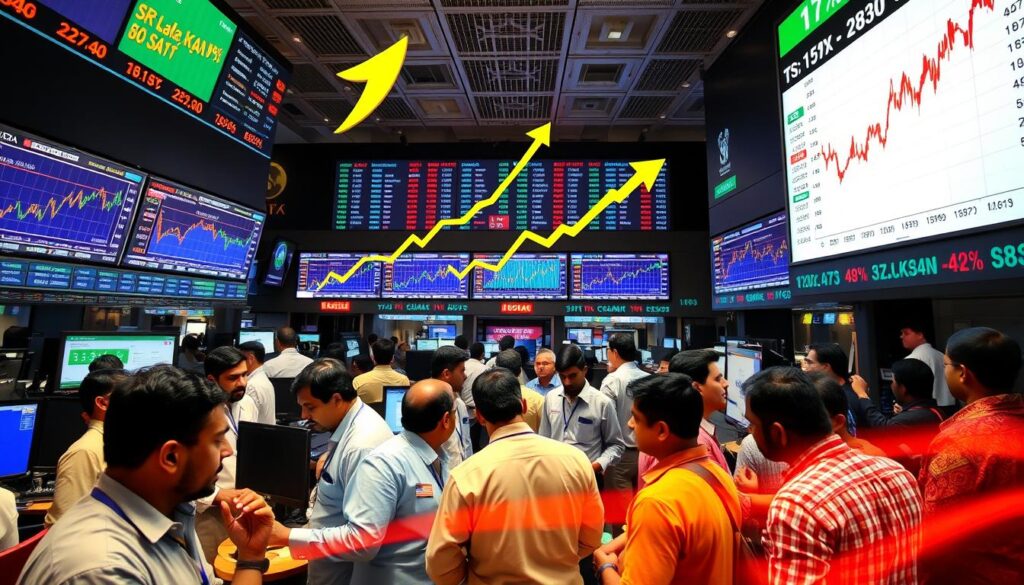
ASPI Surges 15% as Stock Market Recovers in 2024

ASPI Surges 15% as Stock Market Recovers in 2024

The Sri Lankan stock market showed strong recovery in 2024. The All Share Price Index (ASPI) went up a lot in the first half of the year. This was a big moment for the country’s economic bounce back. It showed investors were feeling good about putting their money in Sri Lanka. The rise in the ASPI index was a sign of growing confidence. It also showed the country’s overall economic improvement.

The economy of Sri Lanka is looking up, according to fiscal data. Government revenue jumped from Rs. 1,448 billion in 2022 to Rs. 2,110 billion in 2023. Meanwhile, tax revenue went from Rs. 1,283 billion to Rs. 1,934 billion. At the same time, government spending increased a lot. This was to help the economy grow more.

The country sold less abroad, with exports dropping. However, the tourism sector saw a lot more visitors. This showed the world is trusting Sri Lanka more. There was also a big increase in money sent home by workers abroad. This helped improve the country’s financial health overall.

The recovery of the stock market was helped by better monetary conditions. The interest rates banks charge each other fell significantly. And, the returns on short-term government loans also went down. This made it cheaper for people and companies to borrow money. This likely helped the stock market do well, attracting both local and global investors.

Stock Market Recovers, ASPI Gains 15% in First Half of 2024

The 15% increase in the ASPI shows Sri Lanka’s economic progress. These results are good news. But, we need to watch the world’s political and economic changes too. They could affect the market. Still, this positive change gives hope for a strong market and ongoing investments ahead.

Analyzing the Reasons Behind ASPI’s 15% Climb

The All Share Price Index (ASPI) of the Sri Lankan stock market rose by 15% in 2024. This jump shows the impact of different factors. The foreign investment trends, updated economic policies, and sectoral performance together led to this market upturn.

The Impact of Foreign Investment Trends on ASPI

Foreign investment is key to the Sri Lankan stock market. There’s an ongoing change between money coming in and out. Even with a net foreign outflow in 2024, foreign investors bought LKR 100 million worth. This indicates global trust in some market sectors.

How Economic Policies Influenced the Stock Market Recovery

New economic policies have helped the market find stable ground. The 2024 Fiscal Management Report outlines a focus on spending smart and increasing revenue. These actions helped the Sri Lankan stock market find balance, aiding the ASPI’s rise.

Sectoral Performances Driving ASPI’s Surge

Important sectors like financial services helped push the ASPI up. Sectors such as diversified financials, food, beverage, & tobacco, have seen big growth. They played a major part in the ASPI’s 15% increase in 2024.

Sector Contribution to Turnover Percentage of Total Market Turnover
Banking and Financial Services LKR 662 million 30%
Diversified Financials LKR 403 million 18%
Food, Beverage & Tobacco LKR 400 million 18%
Capital Goods LKR 210 million 9%
Consumer Services LKR 173 million 8%

With market capitalization on the rise, it’s evident that specific investments and policies worked together to lift the ASPI. These efforts show the detailed work needed in Sri Lankan stock market analysis. It illustrates how government, sectoral, and global factors combine to boost the market.

Sri Lankan stock market analysis

Stock Market Recovers, ASPI Gains 15% in First Half of 2024

The financial news from Sri Lanka’s stock market is positive. The All-Share Price Index (ASPI) went up by 15% in the first half of 2024. This shows the market and economy are strong. Investors are showing confidence in different sectors, not just one. Banks and John Keells Holdings made big contributions. The S&P 20 index also went up by about 19%, showing great investment chances in the country.

Local money flowing into the market has helped it recover. This is because investment in bonds is giving lower returns. Also, investors are taking less risk. This change matches well with the good news from the International Monetary Fund (IMF). Past financial troubles made the Sri Lankan Rupee drop. But now, the market could go up by 40-60% in the next 18 months. This is if it keeps following the IMF’s advice and gets ongoing investor support.

As people become more hopeful about the market, how Sri Lanka deals with its foreign debt is crucial. If banks do well, we might see changes in the stock market. The market has grown, showing a 9.77% gain recently. Measures of market health look good too. Local players, wealthy individuals, and regular folks have good expectations for mid-2025. They think the market will keep getting better. This is linked to peaceful changes in politics, moving towards the Janatha Vimukthi Peramuna (JVP). The story of Sri Lanka’s economic recovery ties into this political shift. This shows the stock market’s rise is also a sign of the country’s overall strength.

Rajapaksa Returns to Sri Lanka After Self-Imposed Exile

Rajapaksa Returns to Sri Lanka After Self-Imposed Exile

On September 2, 2022, Sri Lanka welcomed back former President Rajapaksa after his self-imposed exile. He had left due to a painful economic crisis and civil unrest. During his exile, Rajapaksa visited countries like the Maldives, Singapore, and Thailand. He returned with tight security but without public media at the airport. A defense ministry spokesperson confirmed his return and assured he would receive proper security. Rajapaksa Sri Lanka return happens as the nation faces tough economic problems.

Key Takeaways

  • Sri Lanka’s economic crisis has led to an inflation rate of around 65%.
  • The country is facing a staggering $51 billion debt, with the IMF proposing a $2.9 billion loan subject to stringent fiscal reforms and debt restructuring.
  • Privatization of certain public sector units is under consideration, which might ignite resistance from trade unions worried about job security.
  • An innovative system requiring vehicles to have a QR code for fuel purchases has been implemented, though resulting in long queues.
  • Mahinda and Gotabaya Rajapaksa have been pivotal in the nation’s politics, the former president and the latter as both President and Defence Secretary.
  • With just over a month spent abroad, former President Rajapaksa returns to Sri Lanka after self-imposed exile, stepping into a climate of continued public frustration.
  • Rajapaksa latest updates are significant in the context of Sri Lanka’s ongoing struggle with economic hardship and political stability.

The Circumstances Around Former President Rajapaksa’s Departure and Exile

Gotabaya Rajapaksa’s time as president happened during Sri Lanka’s worst economic crisis. His leaving the country shows a crucial time in its history. Bad management led to this crisis and increased public anger.

Escalation of Protests and Economic Crisis Preceding the Exodus

Sri Lanka faced a severe downturn, with not enough basic goods and high inflation. Rajapaksa’s policies made the economy worse, leading to bankruptcy. This was a first for the country since becoming independent in 1948. As life got harder, more people protested against Rajapaksa, asking for accountability and change.

Fateful July: Presidential Evacuation and Public Uprising

July 2022 was a crucial time for Sri Lanka because of constant protests. Gotabaya Rajapaksa had to leave the presidential home when protesters got in. This showed how serious the unrest was. It led to Rajapaksa’s resignation, which he gave from abroad.

Rajapaksa’s International Haven: From Maldives to Singapore and Thailand

After leaving Sri Lanka suddenly, Rajapaksa first went to the Maldives, then to Singapore where he resigned. Then he moved to Thailand, always looking for safety. Each stop was part of his journey after losing power. It shows his fall while his country was in economic and governance crises.

The economic meltdown in Sri Lanka shows deeper issues. For instance, reversing an organic farming policy is crucial to see the impact of such decisions during crises. Abrupt changes without solid planning or support can cause problems, as seen in Sri Lanka’s shift from organic farming.

Former President Rajapaksa Returns to Sri Lanka After Self-Imposed Exile

Ex-President Rajapaksa is back in Sri Lanka after 52 days away. His return brings tight security and lots of questions about its impact. This part talks about his arrival, people’s reactions, and Sri Lanka’s economic issues.

Enigmatic Arrival Under Tight Security

Rajapaksa’s arrival was closely watched due to safety and unrest fears. He returned with high security. This included a new army and police squad, ensuring his safe trip to Colombo.

Public Response and Political Implications

People’s reactions to Rajapaksa’s return are mixed. Some don’t mind his return, seeing it as his right. But, others want him to face charges for corruption and mismanagement. Politicians too are split, affecting Sri Lanka’s stability and public trust.

Sri Lanka’s Ongoing Struggle with Economic Hardships

Rajapaksa comes back to a country facing an economic crisis. Despite an IMF bailout promise, Sri Lanka struggles with GDP shrinkage and item shortages. Inflation over 65% worsens these issues, impacting people’s lives and causing dissatisfaction.

This situation raises questions about Sri Lanka’s recovery and stability with Rajapaksa back. Looking ahead, his role in the country’s future is crucial to watch.

Examining the Impact of Rajapaksa’s Return on Sri Lankan Politics

Gotabaya Rajapaksa’s comeback has stirred the political scene in Sri Lanka, highlighting ongoing issues since he left office. His time as president saw economic challenges grow, with foreign reserves dropping dramatically. In less than two years, reserves went from USD 8 billion to USD 2 billion. This situation has led to severe power outages and a worrying increase in child malnutrition.

India has been a key helper since January 2022, providing over USD 3.5 billion in aid. Yet, moving towards organic farming has hurt the economy, especially in tea and rice production. This shift has made economic stability harder to achieve. The effects of Rajapaksa’s return could either quicken recovery or deepen the chaos. His resignation, driven by public outcry, has left a lasting mark on political accountability in Sri Lanka.

Citizens are concerned that Rajapaksa’s return might reignite past problems. Discussions are ongoing about the potential for legal actions to address previous issues. The government’s handling of fuel and food shortages is critical to either stabilizing the country or sparking more protests. With OMP Sri Lanka providing vital updates, the public stays informed about their nation’s developments.

Sri Lanka’s Eco-Friendly Initiatives Boost Tourism Numbers

Sri Lanka’s Eco-Friendly Initiatives Boost Tourism Numbers

Sri Lanka is making big moves in sustainable tourism. The government has set new rules to boost eco-tourism. Their efforts paid off with a UN award for mangrove restoration.

Tourism is vital to Sri Lanka’s economy, making up 10% of GDP. But rapid growth has caused problems. Hotels use more water and make more waste than regular homes.

To fix this, Sri Lanka created the R-NSTC framework. It covers nine areas, including sustainability and community engagement. The framework aims to make tourism more eco-friendly.

The R-NSTC launch event drew over 100 guests. It also unveiled the Uva Provincial Tourism website. This site showcases top tourist spots in the Uva province.

Eco-tourism is already working well in Sri Lanka. Wildlife parks drew 39.2% of tourists in 2023. Hurulu Eco Park was the most popular spot.

Most hotels in Sri Lanka are working towards eco-friendly practices. The THASL President highlighted this trend.

Gal Oya Lodge is a great example of sustainable tourism. It hires 80% of staff from nearby villages. The lodge also works with wildlife groups on research projects.

Another success story is the Barnhouse Studio. It’s Sri Lanka’s first upcycled hotel. The hotel won an award for its eco-friendly practices in 2023.

Sri Lanka’s eco-tourism matches global trends. The country has room to grow in this area. By focusing on sustainability, Sri Lanka can attract more eco-minded travelers.

The government and private sector are working together. Their efforts should boost tourism and help the economy. At the same time, they’re protecting Sri Lanka’s natural beauty.

Key Takeaways

  • Sri Lanka is actively promoting sustainable tourism through eco-friendly initiatives and legal amendments.
  • The R-NSTC framework and Uva Provincial Tourism Promotional website aim to uplift the eco-tourism industry.
  • Wildlife parks and eco-lodges are attracting a significant portion of tourist arrivals.
  • Hotels and resorts in Sri Lanka are embracing sustainability and local community engagement.
  • Sri Lanka’s ecotourism practices align with global trends and have the potential for further growth.

Sri Lanka’s Commitment to Sustainable Tourism

Sri Lanka is making big moves to boost eco-tourism. The government has set new rules to help the industry grow. These steps aim to protect the country’s natural beauty.

A key project is restoring mangrove ecosystems. In two years, 326 hectares of mangroves were planted. This effort helps save wildlife and fight climate change.

Sri Lanka’s work on mangroves has won praise. The UN gave them a Flagship Award for their efforts.

Government Regulations and Legal Amendments

The Sri Lanka Tourism Development Authority (SLTDA) is working with the UN. They’ve created a plan to make tourism more eco-friendly. This plan focuses on hotels first.

The SLTDA is helping with money and know-how. They’re running a test project for eco-friendly tourism certificates.

Tourism Minister John Amaratunga says sustainable growth is key. The goal is to make Sri Lanka a top eco-friendly spot in 3-5 years.

International Recognition for Mangrove Restoration Efforts

Sri Lanka’s work to restore ecosystems has caught global attention. Their mangrove planting efforts stand out. Here’s a look at what they’ve achieved:

Year Mangrove Area Planted (Hectares) International Recognition
2019 150
2020 176 United Nations Flagship Award
Total 326

These efforts help preserve Sri Lanka’s unique nature. They also make the country more appealing to eco-conscious tourists. Sri Lanka is setting a great example for other countries to follow.

Eco-Tourism Attractions and Infrastructure Development

Sri Lanka is boosting sustainable tourism through eco-friendly attractions and improved infrastructure. The country has unveiled new national parks and wildlife sanctuaries. These include the 2,500-hectare Gal Oya National Park and Manigala Forest Lodge.

The government has upgraded sanitary facilities at popular eco-tourism spots. These improvements cater to foreign tourists at Sinharaja, Kanneliya, Hurulu, Knuckles, and Udawattakele. They ensure a comfortable and hygienic environment for visitors.

Online Ticket Reservation System for Popular Destinations

Sri Lanka has launched “Day Visitor E-Permits” for several national parks. This online system covers Yala, Udawalawe, Horton Plains, Kaudulla, Minneriya, and Wilpattu. Visitors can now plan trips easily and avoid long queues.

These eco-tourism efforts have boosted Sri Lanka’s tourism industry. In early 2023, the country welcomed over 524,000 tourists. May 2023 saw an 8% increase in foreign arrivals compared to last year.

Year Foreign Tourist Arrivals Eco-Tourism Engagement
2018 2.3 million 52% (1.1 million)
2000 400,414 1% (4,004)

Sri Lanka faces challenges from climate change and unsustainable practices. Yet, it remains dedicated to sustainable tourism and biodiversity conservation. With its unique species and protected areas, Sri Lanka could become a top eco-tourism destination.

Sri Lanka’s Eco-Friendly Initiatives Attract Surge in Tourism

Sri Lanka’s eco-friendly tourism practices have boosted visitor numbers. The country’s tourism sector has seen a rise in eco-conscious travelers. In early 2024, forest attractions drew 364,521 tourists, up from previous years.

Significant Increase in Local and Foreign Tourist Arrivals

Sri Lanka’s focus on ecotourism has improved its appeal. The country upgraded roads, airports, and tech to enhance visitor experiences. These changes attracted both foreign and local tourists.

Sri Lanka aims for 2.3 million foreign tourists this year. Their goal for 2025 is 3 million visitors.

Rising Percentage of Foreign Tourists Among Visitors

The share of foreign tourists has grown steadily. In 2022, they made up 19.8% of visitors. This rose to 27.8% in 2023 and 40% in 2024.

Free 30-day visas for 35 countries started October 1. This move has attracted more international tourists. Tourism earnings reached $1.88 billion in seven months, a 73.3% increase from last year.

Sri Lanka: Mass Protests Force Rajapaksa’s Resignation

Sri Lanka: Mass Protests Force Rajapaksa’s Resignation

Sri Lanka’s politics have drastically changed due to mass protests. These protests brought together hundreds of thousands of citizens. They eventually led to the shocking resignation of President Gotabaya Rajapaksa.

The public, upset by worsening poverty and a prolonged economic crisis, took to the streets. This massive display of anger forced Rajapaksa to resign from Singapore on July 13th.

Sri Lanka faced its worst economic state since becoming independent in 1948. Citizens struggled with high inflation and a lack of basic needs. Their protests expressed deep frustration with the lack of fuel, food, and medicines.

The people also showed their anger toward the Rajapaksa family’s leadership. The resulting peaceful protests have now opened a path for political change. Sri Lanka is at a turning point, with calls for reform and a new “unity government.”

In these hard times, a sense of national unity shines as a sliver of hope. Sinhalese, Tamil, and Muslim communities are coming together. They seek justice and better days ahead.

The world is watching as Sri Lanka fights to overcome this crisis. With help from the IMF and others, there’s hope for recovery.

Mass Protests Lead to Resignation of President Gotabaya Rajapaksa

The Prelude to Change: Economic Crisis and Public Uprising

In early 2022, Sri Lanka was on the brink of significant change due to a major crisis. The country faced its worst economic downturn with severe inflation, power cuts, and shortages of basics like fuel and medicine. These problems were due to government actions and alleged corruption, sparking public demonstrations in Colombo and beyond.

Socio-Economic Turmoil and the Cry for Accountability

The faltering economy led to citizens demanding accountability. They protested in large numbers at Galle Face Green. The protests were not just about economic issues. They were a deep-rooted uprising against the leadership, showing significant political unrest in Sri Lanka. For insights into reforms for economic stability, check out Sri Lanka’s Education Minister’s New Reforms.

Unity Among Sinhalese, Tamils, and Muslims Against Injustice

Sri Lanka’s ethnic groups—Sinhalese, Tamils, and Muslims—united in their protests. They wanted President Gotabaya Rajapaksa to resign as a stand against injustice and corruption. Their united efforts showed that their movement went beyond ethnic differences, aiming for fairness and justice for all.

Bridging the Protests and Political Allegations

The protests were closely linked to allegations of political mismanagement. People were vocal about mishandled public funds and economic missteps causing their suffering. In light of the crisis, there were calls for new leadership and health security measures. This aimed to strengthen the nation against socio-political instability. Learn more here: Sri Lanka’s National Action Plan for Health.

Candidate Votes Received
Ranil Wickremesinghe 134
Dullas Alahapperuma 82
Anura Kumara Dissanayake 3
Parliament Participation
Votes Cast 223
Abstentions 2
Invalid Ballots 4

public demonstrations Colombo

Mass Protests Lead to Resignation of President Gotabaya Rajapaksa

In Sri Lanka, a significant uprising led to President Gotabaya Rajapaksa stepping down. This was a big moment caused by widespread anger. Tens of thousands of citizens marched against economic troubles and government failures, demanding change. These protests set a dramatic example for South Asia’s political scene.

These protests started in April because of a severe economic crisis. For 92 days, people from all over, despite transport issues and intense heat, walked to Colombo. Some traveled more than 20 km.

A police curfew was set to stop the protests but failed. It was lifted, giving protesters more determination to push for leadership change.

The push for Rajapaksa’s resignation led to an extraordinary event. Protesters occupied the presidential home. This showed a strong resistance against the regime. It also showed how different groups worked together for democracy. This effort found support despite government resistance. More about these efforts can be found here.

Economic Indicator Status
Inflation Rate (June) 54.6%
IMF Bailout Requirement $3 billion
Protest Duration 92 days
Distance Walked by Protesters Over 20 km

After Rajapaksa left, there were talks of removing the Presidential system. People wanted a stronger democracy in parliament. Experts like Jayadeva Uyangoda believe this could end the Rajapaksa family’s power.

The resignation didn’t solve all problems. Sri Lanka had to discuss a $2.9 billion deal with the International Monetary Fund amidst tough times. The IMF deal required trust from lenders and skilled leadership to manage the crisis.

Sri Lanka’s struggle shows how powerful citizen protests can be. It’s a lesson in how people can drive change for better governance and economic policies.

The Aftermath: Political Shifts and the Quest for Stability

After President Gotabaya Rajapaksa stepped down, Sri Lanka sought political stability. Ranil Wickremesinghe became president amid high security, including a social media ban. This security was to manage public demonstrations in Colombo. The civil disobedience movement and other societal groups played a big role in this change. Activists like Wasantha Mudalige faced tough legal actions.

The president’s removal was the peak of long-term protests. Authorities reacted strongly, using tear gas and water cannons on the crowd. Many people were arrested for ignoring the curfew orders. A big reshuffle happened in the government also, with Ali Sabry resigning as finance minister after just one day.

Sri Lanka’s journey toward recovery is still on shaky ground due to economic issues. The country is trying to manage a huge debt over $50 billion. This debt is owed to countries like India, China, Japan, and others. As Sri Lanka tries to fix its economy, it is part of a worldwide financial challenge. The United Nations says around 1.7 billion people globally face economic hardships. Sri Lanka’s efforts include seeking help from the IMF for recovery. For more info, one can read about Sri Lanka’s external debt and its impact.

Educational reform in Sri Lanka is a big focus. The government is putting money into improvements, like making education digital. This is to prepare the youth for future challenges. Key endeavors include working with universities and launching programs like Cambridge Climate Quest in multiple languages. These steps showcase Sri Lanka’s drive toward sustainability and growth. More about these educational reforms can be found at Sri Lanka’s new education initiatives.