Buddhist Monks Lead Sri Lanka Protests: Key Questions Emerge

Buddhist Monks Lead Sri Lanka Protests: Key Questions Emerge

The noise from civil disobedience in Sri Lanka grew louder with Buddhist monks joining in. They showed the socio-political influence of Buddhism in the country. When people protested, leading to President Gotabaya Rajapaksa stepping down, monks were there. They stood with Tamils, Muslims, Christians, and Sinhala Buddhists to speak out against poor government decisions. This shows monks taking a stand is shaking up their traditional role in society.

Venerable Mahayaye Vineetha from Kandy has sparked talks on monks getting into politics. This change from religious roles to activist ones has people talking. As religion and politics mix, monks have backed political leaders and joined nationalist movements. This has sometimes led to tough talk.

Some question if monks should be in protests, given their roles. The naming of a controversial monk to a government group, and support for violence by some, highlights this debate. Still, many in Sri Lanka, especially young people, see the monks’ role in protests positively. They hope, though, that monks won’t dive too deep into politics.

Monks’ role in Sri Lanka protests raises familiar questions

Key Takeaways

  • Monks are key in Sri Lanka’s fight against bad economic decisions.
  • The influence of Buddhism shapes the country’s politics and people’s thoughts.
  • Monks joining protests have caused some disagreement among supporters.
  • Religious leaders often become political allies, impacting Sri Lankan nationalism.
  • There’s debate on how closely monks should link with politics.

To understand more about Sri Lanka’s economy, check out market trends and the strengthening of the Sri Lankan Rupee against the US dollar.

Monks’ Identity Transforms from Spiritual Leaders to Activists

In Sri Lanka, Buddhist monks have shifted from being spiritual leaders to key activists. This change shows monks taking a more active political role, moving away from their previously neutral position. This recasts how people see their involvement in societal issues.

Historical Role of Buddhist Monks in Sri Lankan Politics

Buddhism has long been linked with Sri Lankan politics. Monks worked as advisors to kings before colonial times and have been part of politics ever since. They played a big role in the movement for independence and the establishment of Sinhalese-majority policies after 1948.

Controversial Monk Appointments and Political Alliances

Buddhist monks have taken on more controversial political roles lately. Monks like Galagoda Atte Gnanasara, with their divisive views, held significant government positions. This shows the complicated relationship between monk leadership, public unrest, and politics. Their stance on economic and social issues puts them in a spot beyond just spiritual leadership.

Society’s Changing Perception of Monastic Engagement in Protests

The view of monks as activists has greatly changed. They were once seen as moral guides. Now, their involvement in protests has reshaped their image.

Monks previously in alliance with political powers have been pushed out of protests. This reflects growing doubts about their influence on politics. Yet, people still respect their spiritual advice, showing mixed feelings about their activism.

In conclusion, Buddhist clergy activism in Sri Lanka shows how spiritual leaders are getting more involved in politics. Their evolving role marks a significant change in both religious and national arenas.

###

Buddhism’s Influence on Sri Lankan Socio-Political Landscape

Buddhism has deeply influenced Sri Lanka, intertwining religion and politics. Monks have grown into significant figures beyond spiritual roles. OMP Sri Lanka’s study shows monks are more active in politics now than before. Some support strict policies linked to the Rajapaksas, while others push for progressive change and communal wellness.

In incidents like the one in Batarramulla, the tension between Buddhism and government came to light. A monk, once allied with Rajapaksa, was criticized during protests. Feelings about religion’s role in politics are mixed. This split goes back to Anagarika Dharmapala and is worsened by events like the 2019 Easter bombings, the civil war, and controversial policies such as forced cremations during Covid-19.

Yet, Buddhism’s presence in daily life is strong. Temples serve as schools and help poor families. Young protesters and citizens welcome monks’ greater civic role. But, worries about monks gaining too much power are there, especially with the Rajapaksas regaining control. This tension between religion and state power continues to influence Sri Lanka’s governance and society.
Sri Lanka’s Health Sector Crisis: Doctors Leave En Masse

Sri Lanka’s Health Sector Crisis: Doctors Leave En Masse

Sri Lanka’s healthcare system faces a big problem. A lot of doctors are moving away because they want better pay. This leaves a huge medical staff shortage and could lead to a public health emergency. In the last two years, over 1,700 doctors have left. This is almost 10% of all the doctors in the country. They’re leaving because of the country’s economic problems.

Last year, inflation in Sri Lanka hit a record 73%. This makes life hard for doctors. They’re dealing with bad work conditions and less money. This situation is getting worse. Now, the Government Medical Officers Association (GMOA) says about 100 rural hospitals might close.

Because many doctors are leaving, some surgeries cannot be done. 75% of emergency service doctors have also left. There are plans to fix this. First, they want countries hiring Sri Lankan doctors to pay some form of compensation. Also, they’re thinking of ways to make doctors stay. This includes making living and working in rural areas better.

The Catalysts Behind the Healthcare Exodus

The healthcare workforce migration from Sri Lanka is due to many reasons. These include economic troubles, soaring inflation, and a lack of healthcare policy improvements. It’s vital to know why this is happening. By understanding, we can work on keeping talent in the country.

Economic Downfall and Inflation Surge Impacting Medical Professionals

Sri Lanka’s economy is in bad shape, and this has hit medical workers hard. The value of the Sri Lankan rupee has fallen sharply. It went from Rs 200 to Rs 365 against the US dollar after March 2022. This drop means healthcare workers can buy less with their money. High inflation rates make this worse. Together, these factors lead many to leave in search of financial stability abroad. This situation is detailed at this link.

Lack of Government Support and Eroding Respect for Doctors

Doctors in Sri Lanka don’t get much help from the government. This makes things worse. Taxes on individuals have gone up a lot. Also, the government barely acknowledges the free work doctors do. This lack of respect and support makes doctors want to work in other countries. It adds to the problem of doctors leaving Sri Lanka.

International Recruitment Luring Healthcare Talent Abroad

While local problems continue, other countries are attracting Sri Lanka’s medical workers. Places like the United Kingdom offer good wages, better career growth, and nicer living conditions. These offers are tempting for many in Sri Lanka’s struggling health system. So, a lot of skilled healthcare workers decide to move for better chances.

Economic problems, little government help, and better chances abroad have caused a big healthcare worker exodus in Sri Lanka. To stop this, Sri Lanka must reform healthcare and manage resources better. Doing so is critical to keep healthcare workers in the country and to protect the nation’s health systems.

Strategies and Potential Solutions for Talent Retention and Sector Recovery

Sri Lanka is dealing with a health crisis and trying to keep its healthcare workers. They are also working on improving the healthcare sector. The Government Medical Officers Association suggests higher pay and more chances for career growth. This is especially for those working in hard-to-reach areas. Still, it’s tough to fight against the unfair treatment within the medical world and to fix the lack of supplies and staff in public hospitals.

The country is in a tough economic spot, as explained by OMP Sri Lanka. The government is working with the IMF to manage the situation without harming public healthcare. They plan to improve the healthcare supply system and start care units with digital support. Their goals include better mental health services and a future Disease Control Center. They hope the National Health Policy 2025 will build a solid health system with support from the WHO.

Economic reforms are needed to fix the nation’s economy. This will help create jobs and reduce poverty. However, the severe economic issues are causing skilled healthcare workers to leave. There’s hope that partnerships between the public and private sectors can change healthcare for the better. Working on these issues and fixing the income gap will make healthcare more fair for everyone. Solving these problems is essential for a better healthcare system in Sri Lanka.

Sri Lanka Dominates Hong Kong at Asian Netball 2024

Sri Lanka Dominates Hong Kong at Asian Netball 2024

In a gripping game of skill and determination, Sri Lanka showed their power in the 2024 Asian Netball Championship Semi-Final. They achieved a Sri Lankan Sports Triumph against Hong Kong, winning 71-47. This victory highlights their strong position in Asian Netball, bringing them closer to championship success.

The battle took place at the Koramangala Indoor Stadium in Bangalore. Sri Lanka took the lead early, ending the first quarter ahead at 18-9. By halftime, they solidified this lead to 36-21. Their skills on the court were clear, pushing them nearer to winning another major title.

Key Takeaways

  • Sri Lanka’s formidable performance against Hong Kong highlighted their championship caliber.
  • The team’s success is a shining example of the prowess of Netball in Asia.
  • Thishala Algama’s standout performance with a 95% shooting accuracy played a significant role in the victory.
  • Sri Lanka’s quest towards a championship hat-trick was evident in their strategic gameplay.
  • Their dominant semi-final win serves as a stepping stone for Sri Lanka in the International Netball Showdown.
  • This victory marked a high point for Sri Lankan Sports Triumph on an international stage.

Sri Lanka’s Netball Team Dominates Hong Kong in 2024 Asian Championship

The Sri Lankan national netball team scored a big win against Hong Kong in the semi-finals of the 2024 Asian Netball Championship. This victory shows the skilled netball players of Sri Lanka and their dedication to women’s sports excellence.

Gayanjali Amarawansa and Thishala Algama’s Impressive Performance

Gayanjali Amarawansa and Thishala Algama led the team to success. Algama’s amazing shooting skills helped the team win the regional championship. Amarawansa played brilliantly, making plays that increased their lead.

Defensive Strategies: Gayani Dissanayake & Rashmi Perera’s Role

Gayani Dissanayake and Rashmi Perera played key roles in defense. They stopped Hong Kong from scoring many times. Their great defense work gave Sri Lanka’s attackers the chance to be bold in their game.

Strong Start and Sustained Lead by Sri Lanka Throughout the Game

Sri Lanka took the lead early in the game. By half-time, they had a big advantage thanks to their strong plays. Sri Lanka kept their lead despite Hong Kong’s comeback tries, ensuring their place in the final.

Sri Lanka’s success in the 2024 Asian Netball Championship highlights their strong training and development programs. This win is more than just a sports victory; it’s a big moment in Sri Lanka’s sports history. It adds to the legacy of women’s sports excellence in the area.

Building Up to the Semi-Final: Sri Lanka’s Journey in the Championship

Sri Lanka’s journey to the semi-finals has been filled with remarkable wins. They’ve shown great skill and determination from the start. Their journey is a quest for sporting honor.

Group Stage Triumphs and Dominant Quarter Performance

Sri Lanka started strong with big wins against the Maldives and the Philippines. They set an early tone of confidence with these games. Their game against Chinese Taipei was a standout, ending with a massive win.

Tactical Mastery: Formations and Player Rotations

The team’s smart use of player rotations and formations has been key. This strategy wasn’t just about talent. It involved deep thinking and planning, which helped them reach the semi-final.

Sri Lanka’s Winning Streak Propelled by Skilled Netball Players

The heart of Sri Lanka’s success lies in its talented players. Their performance has been top-notch, leading to a strong winning streak. This journey is a testament to their determination and skill, as they prepare for more challenging games ahead.

Sri Lanka’s progress carries the dreams of victory and national pride. The competition draws the attention of the entire country, hoping for more success. The team represents not just sports achievement but also Sri Lanka’s rich culture.

Impacts of Skilled Play: Breaking Down Game Statistics

The performance of Sri Lanka’s Netball Team at the 2024 Asian Championship was amazing. They showed great skill and strategy in their games. This led to their win against Hong Kong Netball.

Analyzing Shooting Accuracy: Thishala Algama’s Standout Stats

Thishala Algama’s shooting was key for Sri Lanka’s Netball Team. She scored 54 goals from 57 tries. Her 94.7% shooting rate highlights her skill and the team’s hard work.

Quarter by Quarter: How Sri Lanka Cemented Their Victory

Sri Lanka got stronger every quarter. They used smart moves and teamwork to beat Hong Kong. The second quarter was when they really took the lead, showing their strength in the game.

Team Comparisons: Evaluating Sri Lanka and Hong Kong

Sri Lanka and Hong Kong both had a 90% shooting accuracy in the 2024 Asian Championship. But Sri Lanka made more successful shots. Thishala Algama played a big part in their 24-goal win. This shows Sri Lanka’s strong strategy and skill.

Sri Lanka shines in Women’s Sports Excellence and on global stages like the Venice Biennale. Their success in sports and arts shows their dedication to excellence.

Looking Towards the Final: Sri Lanka’s Preparation for Glory

Sri Lanka’s netball team is gearing up for the Asian Netball 2024 championship final. They aim to secure a victory that would go down in history. Their journey to the final showcases their skill, tactics, and sheer determination. Despite the Netball Federation of Sri Lanka’s dissolution, their progress shows their strong spirit and ambition.

The team’s win over Singapore with a score of 72-70 at the Sri Lanka Invitational International Netball Tournament was thrilling. Tharjini Sivalingam’s shooting accuracy, hitting 96% of her shots in the final, demonstrates the team’s high skill level. However, there are worries about their strategy focusing too much on height. Yet, it’s this tactical play that has brought them success and will be vital for facing future challenges.

The team draws inspiration from Sri Lanka’s rich traditions and resilient spirit. They are especially inspired by the Kandy Esala Perahera festival, a symbol of the country’s ability to overcome and flourish. As they prepare for the final against Hong Kong, every move and strategy reflects their dedication to excellence and unity. This steadfast commitment is what might lead them to achieve a significant win on the international stage.

Sri Lankan President Resigns Amid Mass Protests 2022

Sri Lankan President Resigns Amid Mass Protests 2022

President Gotabaya Rajapaksa decided to resign, marking a historic moment for Sri Lanka. The public’s call for change led to widespread protests. These protests brought political unrest to the country. Rajapaksa, at 73, chose to resign on July 13, 2022. He wanted to make sure power passed on peacefully. This happened during the country’s biggest government crisis in 70 years.

Sri Lanka’s political scene was shaken by months of intense protests. The protests were fueled by rising inflation, which hit 54.6 percent in June. People also faced severe shortages of food, fuel, and medicines. This led them to demand a $3 billion bailout from the International Monetary Fund (IMF). When President Rajapaksa secretly left his residence, protesters took over it. Prime Minister Ranil Wickremesinghe also announced he would resign. This was to help start a new government with multiple parties involved.

Key Takeaways

  • President Gotabaya Rajapaksa decided to resign amid a severe economic and government crisis incited by mass protests.
  • Widespread public unrest manifested through significant social movements, culminating in the occupation of the presidential residence.
  • Inflation has drastically affected Sri Lankan citizens, with rates soaring to 54.6 percent within the country.
  • An immense crowd of protesters, reflecting the nation’s demand for change, has played an integral role in the political shifts.
  • The planned resignation of President Rajapaksa and Prime Minister Wickremesinghe heralds a potential shift to a more democratic era in Sri Lanka.
  • The national crisis was marked by shortages of essential resources and an appeal to the International Monetary Fund for economic relief.
  • The announcement of leadership resignations ignited celebrations in Colombo, signaling a hopeful turn for Sri Lanka’s future.

Mass Protests Lead to Resignation of President Gotabaya Rajapaksa in 2022

In 2022, Sri Lanka faced tough times. Political and economic issues caused big protests and calls for change. People wanted leaders to answer for their actions. This led to a huge increase in protests, especially in Colombo, the capital.

The Escalation of Public Unrest in Sri Lanka

The protests in Colombo grew larger than ever before. People were really upset with the government. Bad economic decisions were to blame. By February 2022, Sri Lanka had only $2.31 billion left. This was not enough to pay off its debts. Crowds of protestors filled the streets. They wanted leaders to fix things right away.

President Gotabaya Rajapaksa’s Flight from Presidential Residence

On July 9, 2022, protestors took over the Presidential home. The police couldn’t stop the large crowds. This forced President Rajapaksa to leave with the help of the military. He resigned five days after. Leaders around the world recognized this. It was a key moment for Sri Lanka’s hope for better leadership.

Nation’s Response and Celebrations Post-Resignation Announcement

When President Rajapaksa resigned, people across the country celebrated. It was a big moment of joy and hope for everyone. They believed this would lead to a government that listens to its people. The protests put Sri Lanka in the global news. It showed the world their struggles and desire for change.

Prelude to the Political Upheaval: Sri Lanka’s Economic Crisis

Before 2022, Sri Lanka was facing a tough time. The country was dealing with a huge foreign debt crisis. This situation made life hard for its people due to a lack of fuel and food. These problems led to big political changes and calls for the government to do better.

Sri Lanka owed $51 billion to other countries. They needed to pay back $28 billion by 2027. By April, the country could not pay its loans, which was a first. This caused even bigger problems, making it hard to get important goods into the country. There was a big shortage of things people needed every day.

The country’s financial troubles made it hard to talk with the IMF about getting help. Because of this, living costs soared, making life difficult for many people. Prices went up by 54.6%, and people were worried the country would go bankrupt. This fear and frustration led to big protests at places like Galle Face Green.

Economic Indicator Status in Early 2022 Status at Mid-Year
Foreign Debt $51 billion $51 billion (Default)
Fuel Availability Limited Critical Shortages
Food Availability Sparse Severe Scarcity
Inflation Rate Elevated 54.6%

Due to these tough conditions, people all over the country protested, especially at Galle Face Green. They were not just upset about the economy. They also wanted big changes in how the country was run. The severe economic problems showed the big issues Sri Lanka faced. The people’s strong desire for change was clear and powerful.

Sri Lanka’s Struggle for Democracy and Civil Revolt

The fight for democracy in Sri Lanka has deep roots linked to the Rajapaksa family’s dominance. For about twenty years, they controlled key government roles. This control led to a widespread demand for political change and reforms from the people.

Political Dynasty: The Rajapaksa Family’s Two-Decade Reign

The Rajapaksa family had a big role in Sri Lanka’s government. They were involved in various positions, from president to finance minister. Their era was filled with issues like nationalism, corruption, and poor economic choices. These problems led to economic crises, making people want a complete change in government.

Transformation of Peaceful Protests to a National Movement

What started as peaceful protests turned into a significant national movement. Thousands marched in Sri Lanka, with major protests at places like Galle Face Green. People took over public areas, showing their frustration. This included families demanding justice for lost ones from the civil war, ongoing for over 1,900 days.

International Response to the Government Crisis

The world has taken notice of Sri Lanka’s political problems, understanding its impact on regional peace. The United States, in particular, has been outspoken. They support the peaceful protestors and are ready to help stabilize Sri Lanka politically and economically. This global concern highlights the need for quick and effective solutions.

Issue Impact Response
Ban on Chemical Fertilizers Devastated agriculture, leading to a 20% drop in rice production and an 18% decrease in tea exports Policy reversed after significant economic backlash
Economic Mismanagement Severe economic crisis leading to the first financial default in Sri Lanka’s history IMF debt restructuring program put on hold; calls for increased transparency and economic reforms
Corruption and Nepotism Heightened public distrust and indignation, fuelling mass protests Popular demands for the Rajapaksa family’s exit from politics and enhanced political accountability

Sri Lanka’s journey towards democracy is marked by strong internal efforts and global support. This movement continues to attract worldwide attention as it seeks to solve long-standing political challenges.

Aftermath and the Search for Political Stability in Sri Lanka

After mass protests, Sri Lanka faces a big challenge. Gotabaya Rajapaksa’s recent resignation has created a need for stable leadership. The country is in its worst economic crisis since becoming independent. The protests show that people want a reliable and open government.

Sri Lanka is at a critical point. It needs a strong plan for recovery. This includes getting help from the International Monetary Fund, fixing foreign debt, and getting international aid. The government must listen to its people and make governance transparent. This is key to Sri Lanka’s success. Problems like the struggling education system need fast solutions. These issues are pressing, especially after mistakes like the sudden fertilizer ban that hurt food supply.

OMP Sri Lanka believes that with smart financial policies and help from other countries, it’s possible to improve the economy. By working on issues like hyperinflation and large debts, Sri Lanka can overcome its crisis. Recent events highlight the need for wise and strong policies. The people, who have protested for change, now wait for a government that can lead them to a better and more secure future.

UNESCO Recognizes Sri Lanka’s Traditional “Kolam” Dance as Intangible Cultural Heritage

UNESCO Recognizes Sri Lanka’s Traditional “Kolam” Dance as Intangible Cultural Heritage

UNESCO has officially recognized Sri Lanka’s traditional Kolam dance as an Intangible Cultural Heritage. This honor highlights the importance of preserving Sri Lanka’s rich cultural heritage. Kolam is a unique art form that showcases the country’s vibrant traditions.

Kolam is a masked dance drama that represents Sri Lanka’s diverse cultural tapestry. This recognition underscores Kolam’s significance in representing Sri Lankan identity globally.

UNESCO Recognizes Sri Lanka's Traditional "Kolam"

UNESCO encourages countries to nominate elements of their intangible cultural heritage for inscription. This effort aims to safeguard and promote cultural diversity worldwide. The inclusion of Kolam celebrates its artistic value and ensures its preservation for future generations.

The Significance of UNESCO’s Recognition of Kolam Dance

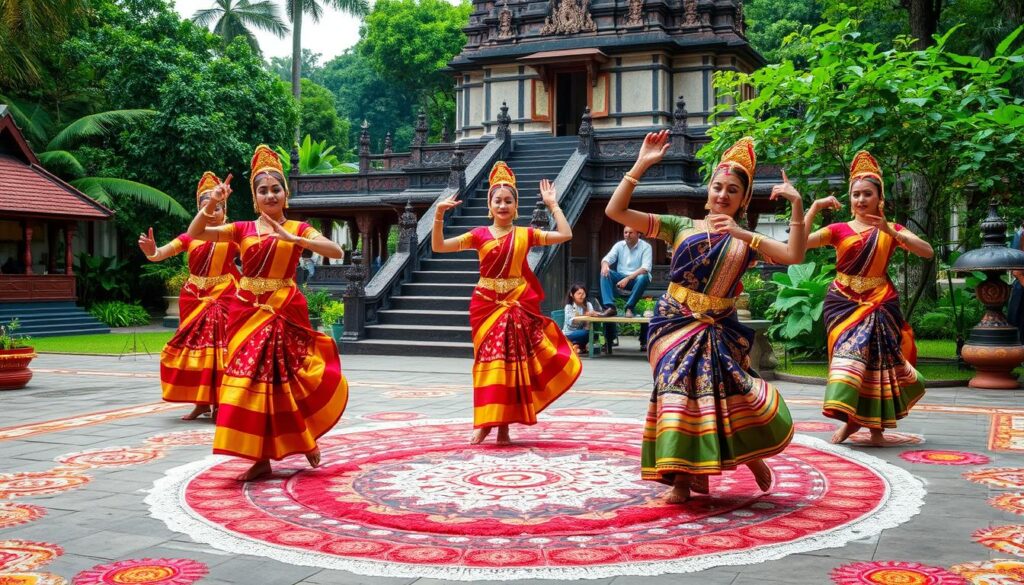
UNESCO’s recognition of Sri Lanka’s kolam dance as intangible cultural heritage is a major milestone. Kolam blends intricate rice flour patterns with graceful dance moves. This Tamil tradition is now protected for future generations.

The UNESCO nod safeguards this ancient art form. It also promotes cultural diversity and human creativity globally. Kolam’s unique artistic elements and traditional significance are now showcased worldwide.

Preserving Sri Lanka’s Rich Cultural Heritage

UNESCO’s recognition highlights the importance of preserving Sri Lanka’s vibrant culture. The 2024 International Conference on “Art and Culture of Tamils” drew over 500 delegates. Eleven countries participated, showing growing interest in Tamil art.

The conference proceedings were compiled into a 188-page volume. It features 82 papers, serving as a valuable resource for researchers and policymakers.

Promoting Cultural Diversity and Human Creativity

UNESCO’s acknowledgment celebrates the diversity of human creativity. It spotlights Sri Lanka’s cultural richness and encourages appreciation of traditional art forms. This recognition fosters cultural exchange and inspires exploration of decorative folk art.

Ensuring the Continuity of Traditional Art Forms

UNESCO’s listing helps ensure kolam dance’s continuity for future generations. It encourages the transmission of knowledge and skills associated with the art form. Young artists can now learn from experienced practitioners.

UNESCO provides a platform for showcasing and celebrating kolam dance. This contributes to its preservation and maintains the vibrancy of Tamil tradition.

The History and Evolution of Kolam Dance

Kolam dance is a captivating Sri Lankan art form. It has evolved over centuries, blending history, beliefs, and artistic expressions. This unique performance art showcases the ingenuity of Sri Lankan artists.

Sri Lanka’s cultural heritage features diverse art and crafts. Traditional dances like Kolam have been shaped by Buddhism and Hinduism. The intricate masks in Kolam performances are stunning and believed to have curative powers.

Origins and Traditional Significance of Kolam

Kolam dance has ancient roots in Sri Lankan rituals and ceremonies. It has been practiced for centuries during religious festivals and social gatherings. The dance serves as storytelling, entertainment, and spiritual expression.

Kolam masks hold great significance in Sri Lankan culture. They represent human, supernatural, and demonic characters. Dancers wearing these masks are believed to channel spiritual energy during performances.

Unique Features and Artistic Elements of Kolam Dance

Kolam dance blends intricate masks, vibrant costumes, and symbolic movements. Skilled artisans craft masks from wood, clay, or paper mache. Each mask represents a specific character or emotion.

Kolam costumes feature colorful fabrics, embroidery, and ornate jewelry. Dancers’ movements convey complex narratives through gestures and rhythmic patterns. Traditional instruments like the Geta-bera drum accompany the performances.

Kolam dance is part of Sri Lanka’s art and crafts heritage. It showcases the country’s rich cultural tapestry alongside handicrafts, architecture, and sculptures. These artistic expressions contribute to Sri Lanka’s diverse cultural landscape.

UNESCO Recognizes Sri Lanka’s Traditional “Kolam” Dance

UNESCO has recognized Sri Lanka’s Kolam dance as Intangible Cultural Heritage. This milestone helps safeguard cultural heritage worldwide. The UNESCO Convention protects traditional art forms and promotes cultural diversity.

Sri Lanka proposed Kolam dance for the UNESCO Intangible Cultural Heritage list. The country has worked hard to preserve this art form. They’ve documented it and taught it to new generations.

UNESCO’s efforts align with Sri Lanka’s initiatives to protect its cultural heritage. These include inventorying practices and ensuring access to related materials and places.

The Process of UNESCO’s Intangible Cultural Heritage Listing

UNESCO encourages countries to submit elements together. They prioritize submissions from more than 10 countries. The listing process evaluates an element’s significance, authenticity, and preservation measures.

Currently, 364 elements are on the ICH Representative and Urgent Safeguarding Lists. There are 12 elements on the Best Practices List. Sri Lanka’s success shows its rich cultural tapestry.

Sri Lanka’s Efforts in Safeguarding Kolam Dance

Kolam dances are famous in Sri Lanka’s coastal areas, especially the southwest. They feature masked dancers and puppetry depicting folklore and historical stories. Sri Lanka has taken steps to protect this art form.

The country has documented Kolam dance and taught it to younger generations. They’ve also worked to raise public awareness about its importance. The partnership between FAO, USAID, and Sri Lanka’s Ministry shows how culture and development are linked.

Global Appreciation for Sri Lankan Traditional Arts

UNESCO’s recognition has brought global attention to Sri Lankan arts. It highlights the country’s diverse artistic expressions, from wood carvings to handloom weaving. This recognition celebrates Sri Lanka’s unique culture.

It also shows the importance of protecting intangible cultural heritage worldwide. Sri Lanka continues to promote its arts on international platforms like the Colombo Art Biennale.